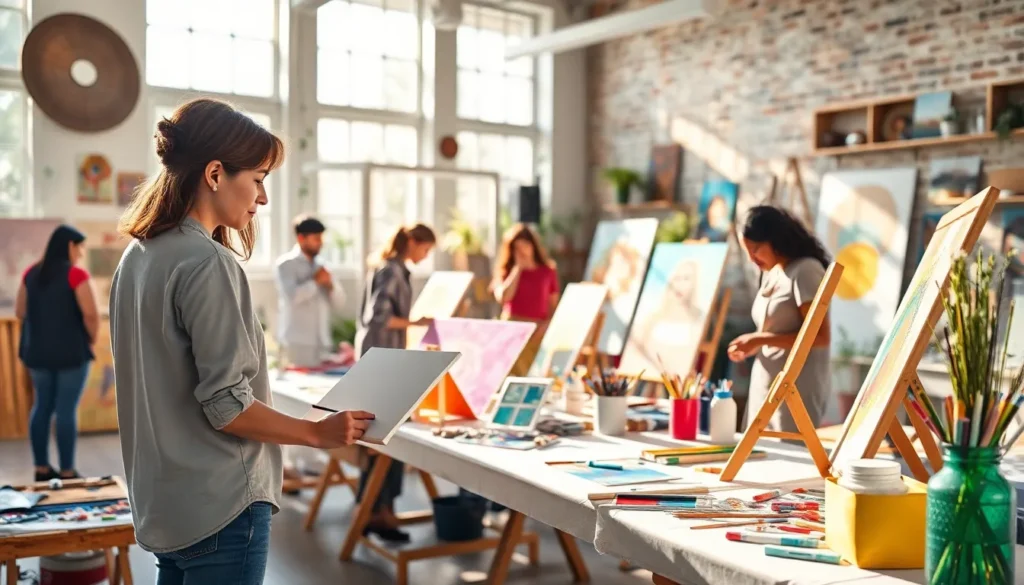
In a world buzzing with chaos and deadlines, finding peace can feel like searching for a needle in a haystack. Enter mindfulness and art therapy—a dynamic duo that’s not just for hippies in tie-dye shirts anymore. Imagine unleashing your inner Picasso while simultaneously giving your stress the boot. Sounds like a dream, right?
Understanding Mindfulness
Mindfulness creates awareness of the present moment. This practice fosters acceptance of thoughts and feelings without judgment.
Definition of Mindfulness
Mindfulness refers to the psychological process of focusing one’s awareness on the present. It involves observing thoughts, emotions, and sensations without reacting to them. Techniques include meditation, breathing exercises, and mindful observation. Individuals practice mindfulness to enhance self-awareness and cultivate a deeper understanding of their experiences.
Benefits of Mindfulness
Mindfulness provides numerous mental health benefits. It reduces stress by promoting relaxation and clarity. Practitioners report improved emotional regulation, which leads to better communication and relationships. Research indicates that regular mindfulness practice enhances cognitive flexibility, allowing individuals to respond more adaptively to challenges. Overall, mindfulness positively impacts mental well-being and fosters resilience.
Overview of Art Therapy
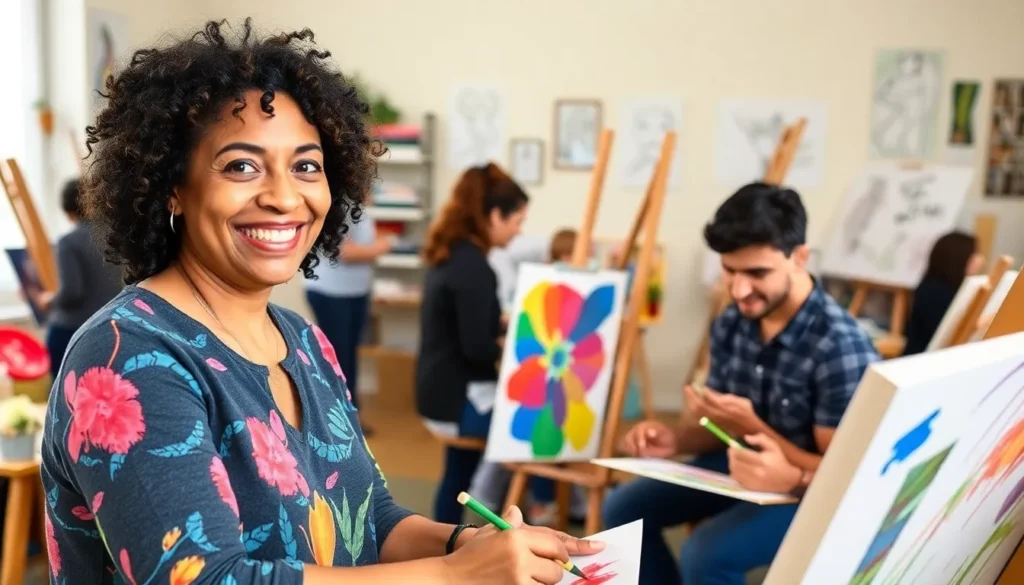
Art therapy utilizes creative processes to improve mental health. It engages individuals in artistic expression, promoting healing, self-discovery, and emotional well-being.
Definition of Art Therapy
Art therapy combines psychology and art to enhance mental health. It enables individuals to express emotions that may be difficult to articulate verbally. Trained therapists guide clients through creative activities, using art as a form of communication. Various mediums, such as painting, drawing, and sculpting, facilitate exploration and self-reflection. Clients often find increased understanding of their emotions and experiences through art-making. This therapeutic approach empowers individuals, promotes emotional release, and fosters personal growth.
Techniques Used in Art Therapy
Art therapy employs diverse techniques tailored to individual needs. Drawing serves as a primary method, allowing clients to visualize their feelings. Painting often enables deeper engagement with colors and textures, facilitating emotional exploration. Collage creation integrates various images, helping individuals express complex thoughts. Sculpting provides a tactile experience, promoting mindfulness and grounding. Group art therapy fosters community and shared experiences, enhancing social support. Each technique encourages self-expression, communication, and healing, making art therapy a versatile and effective therapeutic tool.
The Connection Between Mindfulness and Art Therapy
Mindfulness and art therapy intertwine to create a holistic approach to mental well-being. This integration enables individuals to access their emotions through creative expression while remaining present.
How Mindfulness Enhances Art Therapy
Mindfulness boosts art therapy outcomes by fostering a state of awareness and acceptance. Practicing mindfulness encourages individuals to focus on their current experiences, which enhances emotional expression during creative activities. Drawing or painting while grounded in the present moment allows for deeper self-exploration. Participants often find that mindful techniques diminish anxiety, creating a safe space for vulnerability. Art sessions infused with mindfulness techniques can lead to greater insight and personal growth, ultimately enriching the therapeutic experience.
Case Studies and Evidence
Numerous case studies illustrate the benefits of combining mindfulness and art therapy. Research indicates significant improvements in participants’ emotional regulation and self-esteem. A study involving adults with anxiety disorders showed that those engaged in mindfulness-based art therapy reported a 60% reduction in anxiety levels. Children coping with trauma participating in similar programs demonstrated enhanced resilience and improved coping strategies. Evidence further suggests that this approach successfully reduces feelings of isolation, promoting social connection within group settings. These findings substantiate the effectiveness of integrating mindfulness into art therapy practices.
Practical Applications
Mindfulness and art therapy combine effectively, offering several practical applications for individuals seeking mental well-being.
Mindfulness Exercises in Art Therapy
Mindfulness exercises within art therapy encourage greater awareness during creative expression. Techniques like deep breathing or body scans help individuals focus on the present. Incorporating these practices, participants often find it easier to explore their feelings through art. For example, guided imagery can enhance visualization techniques in painting, allowing emotions to surface more naturally. This facilitation of emotional exploration leads to increased creativity and self-discovery.
Implementation in Clinical Settings
Clinicians increasingly recognize the value of integrating mindfulness and art therapy in treatment. Structured programs often include both individual and group sessions, fostering emotional expression and community support. Art therapists may start with mindfulness techniques, establishing a calming environment before introducing creative activities. Research shows that patients in these settings experience improved emotional regulation and reduced stress levels. Successful implementations address various mental health challenges, such as anxiety and depression, allowing practitioners to tailor therapies to specific needs.
Mindfulness and art therapy together offer a transformative pathway for enhancing mental well-being. By encouraging individuals to engage in creative expression while cultivating present-moment awareness, this combined approach fosters emotional healing and personal growth. As more people discover the benefits of integrating these practices into their lives, the potential for improved mental health outcomes continues to expand. Whether through individual sessions or group activities, the synergy of mindfulness and art therapy creates a supportive environment where individuals can explore their emotions and build resilience. Embracing this holistic method may just be the key to navigating the complexities of modern life with greater ease and confidence.