
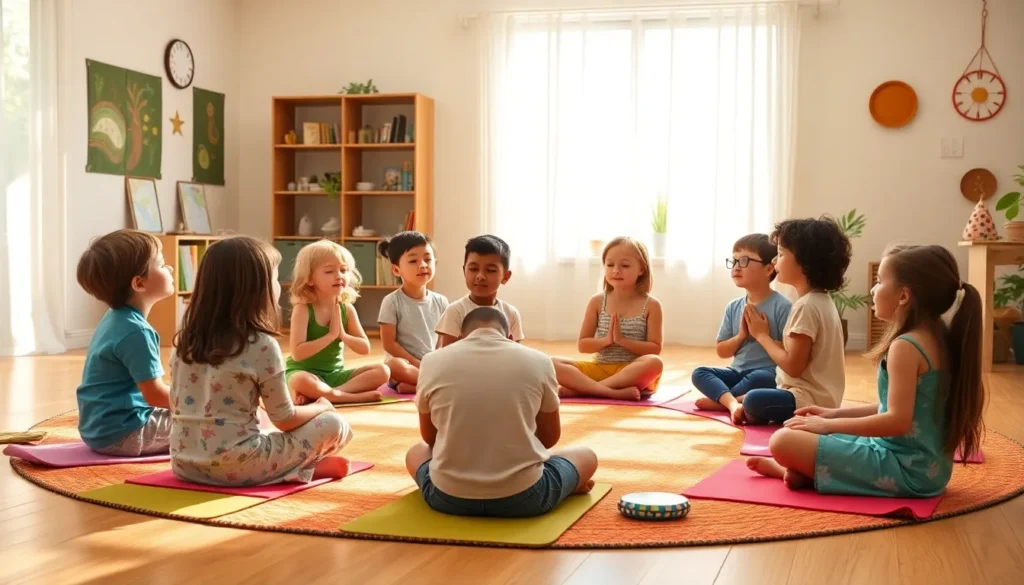
In a world buzzing with distractions, teaching kids to pause and breathe might just be the ultimate superpower. Mindfulness for children isn’t just another trend; it’s a gateway to helping them navigate life’s ups and downs with grace. Imagine a classroom where kids can focus better, manage their emotions, and even find calm amidst chaos. Sounds like magic, right?
Understanding Mindfulness for Children
Mindfulness serves as a valuable skill for children in a world filled with distractions. It provides tools to manage emotions, enhance focus, and foster calmness.
Definition of Mindfulness
Mindfulness refers to the practice of being fully present in the moment. This includes observing thoughts and feelings without judgment. Practicing mindfulness allows children to engage in their surroundings, promoting awareness and appreciation. Techniques such as breathing exercises and mindful activities help cultivate this presence.
Importance of Mindfulness in Childhood
Mindfulness plays a critical role in childhood development. It improves emotional regulation, enabling kids to respond thoughtfully rather than react impulsively. Enhanced focus results in better academic performance and improved relationships with peers. Children who practice mindfulness often experience increased resilience against stress. Such skills provide a foundation for navigating future challenges effectively.
Benefits of Mindfulness for Children

Mindfulness provides significant advantages for children’s emotional and cognitive development. This practice not only enhances understandings of self but also supports their overall well-being.
Emotional Regulation
Emotional regulation becomes more manageable through mindfulness. Children learn to identify and acknowledge their feelings without judgment. Techniques such as deep breathing facilitate calmness during stressful moments. Increased awareness leads to better responses in challenging situations. Research indicates that children practicing mindfulness exhibit reduced anxiety and improved mood. They develop healthier coping strategies, enabling them to navigate emotional upheaval effectively. Moreover, children become equipped to handle disappointments and frustrations, fostering resilience.
Improved Concentration
Improved concentration results from regular mindfulness practice. Mindfulness activities encourage children to focus on the present moment, enhancing their attention spans. Engaging in short mindful exercises can sharpen their ability to concentrate on tasks. Studies reveal that children who practice mindfulness show increased performance in academic settings. They also experience fewer distractions and greater retention of information. This ability to concentrate develops critical cognitive skills, allowing for better learning experiences. Children gain not only focus but also confidence in their abilities to tackle challenges head-on.
Techniques for Practicing Mindfulness
Practicing mindfulness involves several techniques that help children stay grounded and aware of the present moment. These methods encourage them to develop emotional intelligence and improve their focus.
Breathing Exercises
Breathing exercises play a vital role in mindfulness practice. Deep breathing techniques help children calm their minds and bodies by focusing on their breath. Inhale slowly through the nose, hold for a moment, and exhale slowly through the mouth. Children can visualize their breath as a comforting wave, washing away worries. Regularly practicing these exercises reduces stress and promotes relaxation, enabling better emotional regulation during challenging situations.
Mindful Movement
Mindful movement includes activities such as yoga and simple stretches. Engaging in these practices allows children to connect their bodies with their breath. Moving through a series of poses or stretches encourages awareness of bodily sensations and fosters a sense of balance. Choose routines that incorporate elements of fun, like animal poses, to maintain engagement. This technique enhances focus and promotes physical well-being, ultimately supporting overall mindfulness.
Guided Imagery
Guided imagery helps children use their imagination to create calming mental images. This technique involves listening to a narration that leads them through a serene landscape, such as a peaceful beach or a tranquil forest. Visualization fosters relaxation and can help reduce anxiety. Encourage children to explore their feelings during these sessions. Practicing guided imagery regularly strengthens their ability to manage emotions and envision positive outcomes in everyday scenarios.
Integrating Mindfulness into Daily Life
Integrating mindfulness into daily life enhances children’s emotional and cognitive development. Two key areas for this integration are school settings and home environments.
School Settings
Schools can incorporate mindfulness practices through structured programs and activities. Educators can introduce short breathing exercises during class transitions, fostering a calm atmosphere. Teachers might also lead guided imagery sessions, allowing students to visualize peaceful scenarios before tests or challenging tasks. Incorporating mindful movement breaks, such as simple stretching or yoga poses, provides physical activity and promotes focus. Creating a cozy corner in the classroom dedicated to mindfulness resources invites students to engage independently with practice. These initiatives can enhance students’ attention and emotional regulation throughout the school day.
Home Environment
At home, families can create a mindfulness routine that involves everyone. Parents can initiate daily breathing exercises during family time, reinforcing emotional awareness. Simple practices, like mindful eating, encourage children to savor each bite and develop a healthy relationship with food. Evening routines that include reading or sharing thoughts about the day can foster reflection and connection. Parents might also introduce mindfulness apps or resources that offer guided exercises suitable for children. Establishing a serene space in the home dedicated to mindfulness allows families to practice together and enhances their overall well-being.
Embracing mindfulness offers children a pathway to emotional and cognitive growth. By incorporating mindful practices into their daily routines, kids can learn to navigate their feelings and enhance their focus. These skills not only support academic success but also foster resilience and confidence in facing life’s challenges.
Parents and educators play a vital role in this journey by creating supportive environments that encourage mindfulness. Whether through breathing exercises, mindful movement, or guided imagery, these techniques can significantly impact a child’s overall well-being. As children cultivate mindfulness, they develop essential tools that empower them to thrive in an increasingly complex world.